Which CNC Plate Rolling Machine Should Be Used for Rolling Air Ducts Into Cylinders?
Blog 2026-08-12
Ductwork is primarily made of thin sheet metal (mostly 0.5–3 mm thick, with a small number at 4–6 mm), typically galvanized steel, cold-rolled steel, or stainless steel; the diameters are not large; the workpieces are long; the focus is on preventing scratches and misalignment; production volumes are high; and roundness requirements are limited.
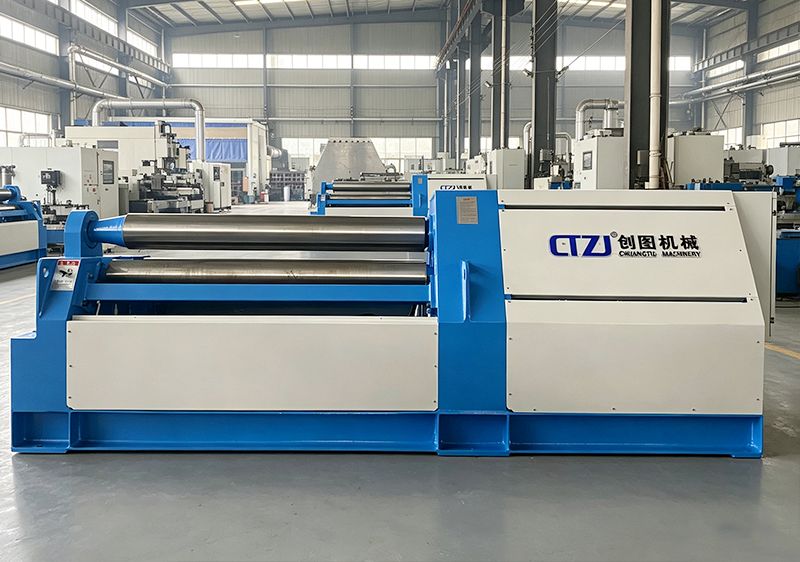
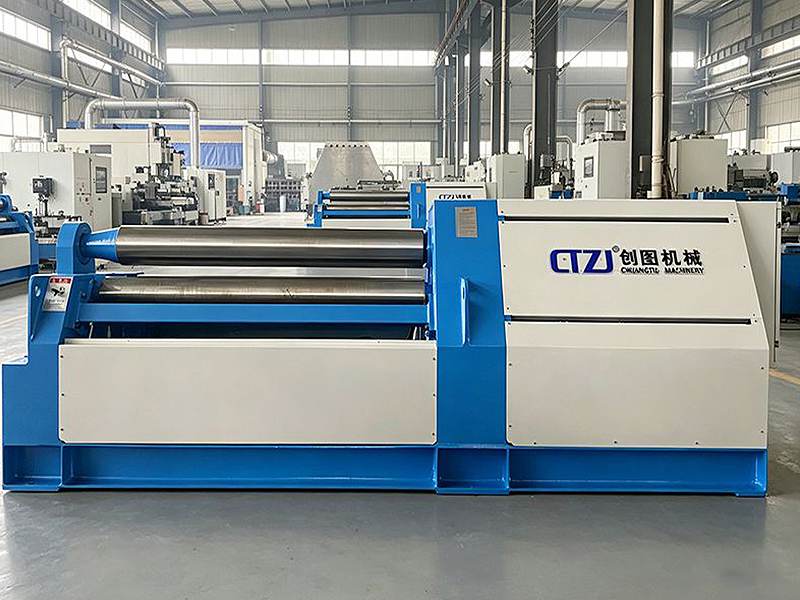
Chuangtu recommends two models for rolling ductwork into cylinders: the 4 roller CNC plate rolling machine and the top-roll universal 3 roller CNC plate rolling machine.
CNC 4 Roller Plate Rolling Machine
This plate bending machine is highly recommended for rolling circular ductwork, particularly galvanised ductwork, stainless steel ductwork and long, thin-gauge ductwork; it is ideal for batch production, long duct lengths, frequent rolling of small diameters, and applications requiring high surface scratch resistance.
Minimising Sheet Displacement
The upper and lower rollers clamp the sheet firmly, preventing thin sheets from shifting out of alignment. When rolling long ducts, this minimises the risk of flaring or misalignment at the edges, ensuring uniform joint gaps and facilitating subsequent seaming or welding.
Pre-Bending For Roll Forming
The machine performs pre-bending at both ends, resulting in minimal straight edges. This eliminates the need for secondary edge milling or end-forming at both ends of the duct, achieving full formation in a single operation.
Intelligent Control System
Sheet thickness and diameter are input via CNC, with automatic calculations; the 4 roller plate rolling machine can be operated even by novices and is suitable for high-volume duct production.
Roll Forming of Various Duct Shapes
Excellent capability for rolling small-diameter circles; capable of rolling tapered ducts (reducer ducts); simple machine adjustment ensures high-quality reducer ducts.
Minimising Scratches on Ducts
Roller surfaces can be polished or rubber-coated, minimising the risk of indentations or scratches on galvanised sheet metal and stainless steel.
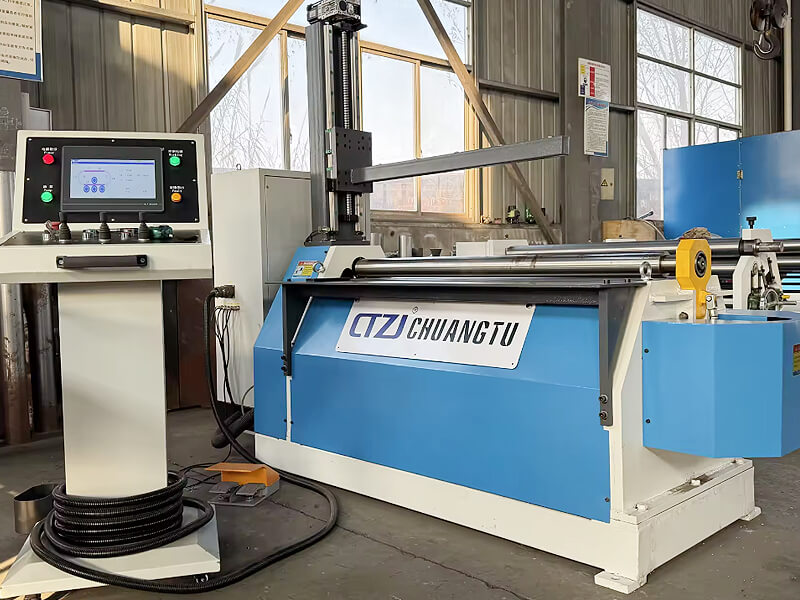
CNC Upper-Roll Universal 3 Roller Plate Rolling Machine
For thin galvanised sheet metal ranging from 0.5 to 1.2 mm, the CNC upper-roll universal 3 roller plate rolling machine is recommended; issues such as misalignment and edge curling may otherwise occur.
Typically used primarily for medium-to-thick ducting of 1.5 mm and above, in small-batch orders where operators are highly skilled, and in scenarios where conical rolling is rarely required.
The purchase price is generally around 30 per cent lower than that of a four-roll plate rolling machine; it features a simple structure and is easy to maintain, making it suitable for manufacturers with limited budgets.
Points to Note When Selecting a Cnc Plate Rolling Machine
Rollers
For thin-gauge ductwork, the roller diameter should be slightly smaller to achieve a tight bend; the roller surfaces should be polished. For stainless steel ductwork, it is recommended to fit polyurethane anti-scratch roller sleeves to prevent the galvanised coating from being scraped off and to avoid indentations in the stainless steel.
CNC System
Opt for a CNC model rather than one with a simple digital display; ensure it features springback compensation. As springback varies significantly in thin ducting sheets, springback compensation is highly practical.
Allowance for Specifications: Select the machine based on the actual maximum sheet thickness and width. For thin sheets, do not choose equipment with excessive tonnage; larger machines have larger roller diameters and cannot roll ducting with small diameters.
Pre-Bending Function
As many ductwork systems utilise a seaming process, the quality of the pre-bend must be excellent; otherwise, the seams will not align properly.
There Are Many Different Sizes of Air Ducts
If you frequently pro duce ductwork with varying diameters, opt directly for a CNC four-roll plate rolling machine.
Selection Table for CNC 4 Roller Plate Bending Machines for Ductwork
| Plate rolling machine model | Maximum thickness of galvanised sheet metal | Effective machining width | Minimum roll diameter when fully loaded | Suitable for ductwork |
| W12CNC-4×1500 | 1.5 mm | 1300 mm | ≥120 mm | Thin ducting, 0.4–1.2 mm, φ150–1200 round ducting |
| W12CNC-4×2000 | 2.0 mm | 1500 mm | ≥150 mm | General-purpose heating and ventilation ducting, 0.5–1.5 mm (best-selling) |
| W12CNC-6×1500 | 3.0 mm | 1500 mm | ≥180 mm | Dust extraction ductwork, thick-walled galvanised ductwork |
| W12CNC-6×2000 | 4.0 mm | 1600 mm | ≥220 mm | Industrial dust extraction, thick-walled ducting for exhaust gases |
| W12CNC-8×2000 | 6.0 mm | 2000 mm | ≥300 mm | Thick-walled carbon steel and large-diameter stainless steel ducting |
We recommend that owners of ventilation duct manufacturers prioritise the selection of CNC 4 roller plate rolling machines, as these offer clear advantages when handling thin sheets, long sheets and ducts with varying diameters, whilst maintaining a low scrap rate.
Only where the sheets are relatively thick, production runs are small and budgets are limited should you consider a CNC top-roll universal 3 roller plate rolling machine.
If you have any queries regarding the selection of a duct rolling machine, please let me know: the range of sheet thicknesses, the width of the duct sheets, whether you will be working with stainless steel, and whether you frequently produce ducts with varying diameters.
Chuangtu will assist you in selecting the appropriate model.